
Newsletter Subscribe
Enter your email address below and subscribe to our newsletter
Enter your email address below and subscribe to our newsletter

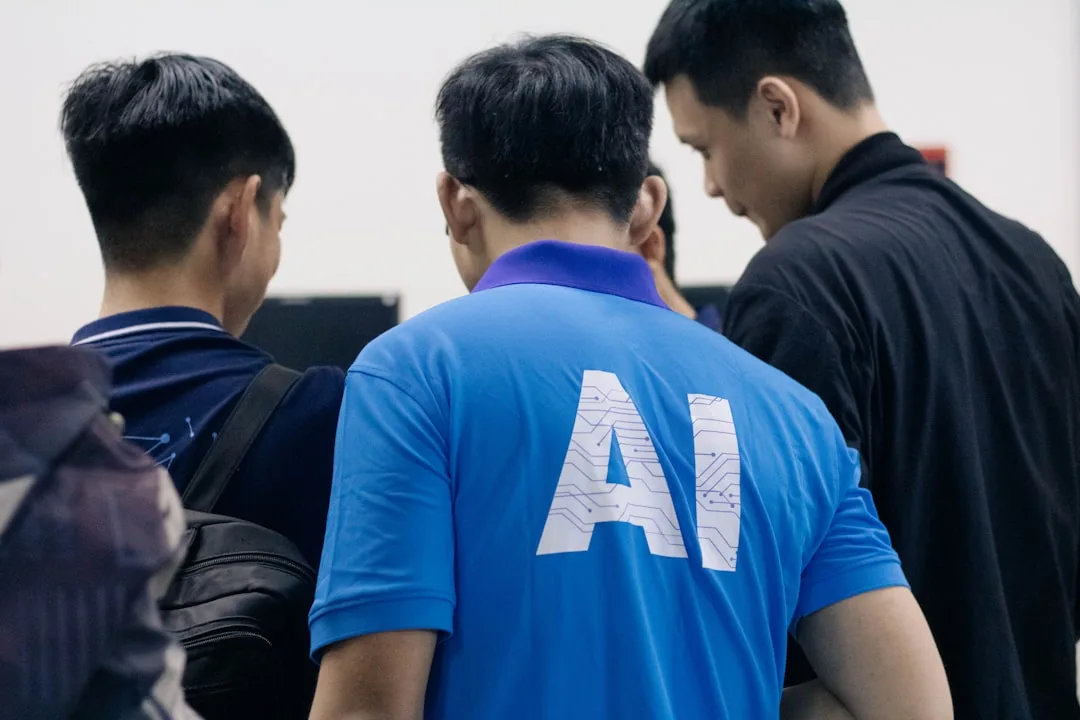
AI Revolution: Transforming Everyday Tech Now
The AI revolution is here, reshaping the tech landscape and integrating seamlessly into our daily lives. As artificial intelligence becomes more ubiquitous, understanding its impact on technology is crucial for developers, founders, and tech enthusiasts.
The AI revolution is not just a buzzword; it’s a fundamental shift in the way technology operates. Companies like OpenAI, Google, and Microsoft are at the forefront, developing AI models that are becoming the backbone of modern applications. These giants are paving the way with projects like OpenAI’s GPT models, Google’s BERT, and Microsoft’s Azure AI services.
The transformation is evident in the tools we use daily. For instance, AI-driven voice assistants like Google Assistant and Amazon Alexa have revolutionized how we interact with our devices, making them more intuitive and user-friendly. These systems leverage natural language processing (NLP) to understand and respond to user queries, effectively bridging the gap between human communication and machine interpretation.
The AI revolution is spearheaded by a handful of tech giants and innovative startups. OpenAI has been a major player, especially with the release of its advanced GPT models, which have set new standards in language understanding and generation. Meanwhile, Google continues to push boundaries with its AI research, particularly in the fields of machine learning and NLP, through projects like BERT and the TensorFlow platform.
Microsoft has also been a key contributor, integrating AI across its suite of products. Their Azure AI services provide developers with robust tools to build intelligent applications, making AI more accessible to a wider audience. Furthermore, startups like Hugging Face are democratizing AI by providing open-source NLP models that empower developers to build sophisticated AI applications without massive computational resources.
The implications of this AI revolution are profound, touching every corner of the tech industry. For developers, this means new opportunities to create smarter, more efficient applications. AI is becoming an essential skill in the developer toolkit, as companies seek talent capable of leveraging AI to enhance user experiences.
For tech companies, AI integration is no longer optional but a necessity to remain competitive. Businesses that harness AI’s potential can offer personalized services, improve operational efficiency, and drive innovation. For instance, AI is transforming customer service with chatbots that handle queries 24/7, improving response times and customer satisfaction.
Moreover, industries such as healthcare, finance, and automotive are witnessing AI-driven transformations. In healthcare, AI algorithms are being used for predictive diagnostics and personalized medicine. In finance, AI models analyze vast datasets to provide insights and automate trading. The automotive industry is on the brink of a revolution with AI-powered autonomous vehicles.
For a deeper dive into the impact of AI on specific sectors, check out our related post on AI in Healthcare: A New Era of Diagnostics.
The AI revolution is not just an upgrade to our current systems but a complete overhaul of how we interact with technology. This transformation is akin to the industrial revolution, where those who adapt and innovate will thrive, while those who resist may fall behind. AI’s potential is vast, and as it continues to evolve, we anticipate more breakthroughs that will further blur the lines between human and machine capabilities.
For developers and tech companies, the time to embrace AI is now. Start by exploring AI platforms like TensorFlow and Hugging Face to integrate AI into your projects. Consider participating in beta programs or AI workshops to stay ahead of the curve. For those looking to deepen their understanding, MIT News offers excellent resources on how AI will shape the future of work and generative AI.
By staying informed and proactive, developers and tech leaders can harness the power of AI to drive innovation and achieve new heights in the tech industry.