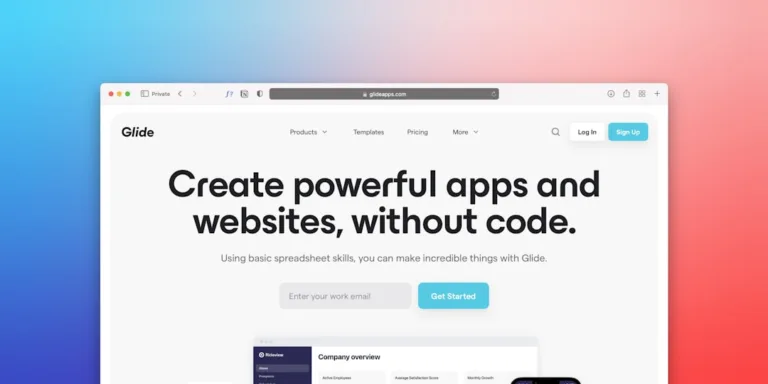
Boost Development Efficiency with Low-Code Solutions
In the dynamic world of startups, where speed, flexibility, and cost-efficiency are paramount, low-code platforms have emerged as powerful allies. These tools not only democratize app development by allowing non-developers to build robust applications but also empower startups to test and iterate quickly. Let’s explore how low-code solutions can solve real challenges, walk through some popular platforms, share insights on what works and what doesn’t, and provide a checklist to help you determine if low-code is right for your startup.
📦 Real Challenge Solved by Low-Code
The Challenge: Speed and Cost of Development
Imagine a startup with a brilliant idea for an MVP (Minimum Viable Product) that requires a complex backend, user-friendly interface, and seamless integration with third-party services. Traditionally, this would mean hiring a team of developers, incurring significant costs, and spending weeks, if not months, in development. For many startups, this time and financial investment is a significant barrier.
The Solution: Low-Code Platforms
Enter low-code platforms. These tools allow startups to build their applications with minimal coding, using drag-and-drop interfaces and pre-built templates. This not only reduces development time and cost but also empowers non-technical founders to take charge of the development process.
🛠️ Platform Walkthrough
Exploring Bubble, Retool, and Softr
-
Bubble: Bubble is a versatile low-code platform that allows you to build fully functional web applications with a visual editor. You can design the UI, set up workflows, and integrate APIs, all without writing a single line of code. Its strong community support and extensive plugin marketplace make it a favorite among startups.
-
Retool: Retool is ideal for building internal tools. It connects to your database or API, allowing you to create custom dashboards, admin panels, and more. Retool’s strength lies in its flexibility and the ease with which you can manipulate data and create complex workflows.
-
Softr: Softr enables you to build websites and web apps using Airtable as your database. It offers pre-designed templates and components, making it easy for anyone to assemble a site or application quickly. It’s perfect for startups looking for a simple, cost-effective solution.
🎯 What Worked, What Didn’t, Tips for Success
What Worked
-
Rapid Prototyping: Startups have successfully used low-code platforms to quickly prototype their ideas, gather feedback, and iterate. This rapid development cycle is a significant advantage in today’s competitive environment.
-
Cost Efficiency: By eliminating the need for a full-time development team, startups have saved substantial amounts of money, which can be reinvested into other critical areas of the business.
What Didn’t
-
Scalability Issues: While low-code platforms are excellent for MVPs and small projects, scaling them to handle increased traffic and data loads can be challenging. Startups may find themselves needing to transition to custom-coded solutions as they grow.
-
Customization Limitations: Although low-code platforms offer a degree of flexibility, they can be limiting when it comes to highly customized features or unique business logic.
Tips for Success
-
Start Small: Begin with a small project or a specific feature to get acquainted with the platform. This approach reduces risk and allows you to build confidence gradually.
-
Leverage Community Resources: Many low-code platforms have active communities and resources. Engage with these communities to learn from others’ experiences and troubleshoot issues.
-
Plan for Transition: Be prepared for the possibility of transitioning to a custom-coded solution if your application requires more scalability or customization than the low-code platform can provide.
✅ Use-Case Checklists
Is Low-Code Right for Your Startup?
- Do You Need a Quick MVP? Low-code platforms are ideal for quickly building and testing MVPs.
- Do You Have Budget Constraints? If hiring a full-time development team is beyond your budget, low-code can be a cost-effective alternative.
- Is Your Team Non-Technical? Low-code tools empower non-developers to build applications without writing code.
🔗 Automation-Related RuntimeRebel Content
For startups interested in automating their workflows, check out our article on “Streamlining Operations with Automation Tools” to learn how you can integrate low-code solutions with automation platforms for even greater efficiency.
⚡ TL;DR Summary
- Platform Worth Trying: Bubble for its versatility and community support.
- Gotcha to Avoid: Beware of scalability limitations as your application grows.
- Cost-Saving Tip: Utilize pre-built templates and components to reduce development time and costs.
💡 Expert Insight
As low-code platforms continue to evolve, the convergence of low-code and AI technologies is creating exciting new possibilities. AI-powered low-code tools can automate routine coding tasks, suggesting optimizations and improvements, further reducing development time and complexity. However, some developers remain skeptical, questioning the scalability and customization potential of low-code solutions. While these concerns are valid, the benefits of speed and cost-efficiency make low-code an attractive option for startups, especially during the early stages.
👉 What to Do Next
If you’re ready to explore low-code solutions for your startup, check out our “Startup Toolkit” for a comprehensive guide on tools and platforms that can help you build, launch, and grow your business. Additionally, our “Platform Comparison Post” provides an in-depth look at various low-code platforms to help you choose the best fit for your needs.
Low-code platforms are transforming the way startups approach development, offering a path to rapid innovation and growth. By understanding the strengths and limitations of these tools, startups can leverage low-code to build robust applications, iterate quickly, and stay ahead in the competitive startup landscape.