Newsletter Subscribe
Enter your email address below and subscribe to our newsletter
Enter your email address below and subscribe to our newsletter

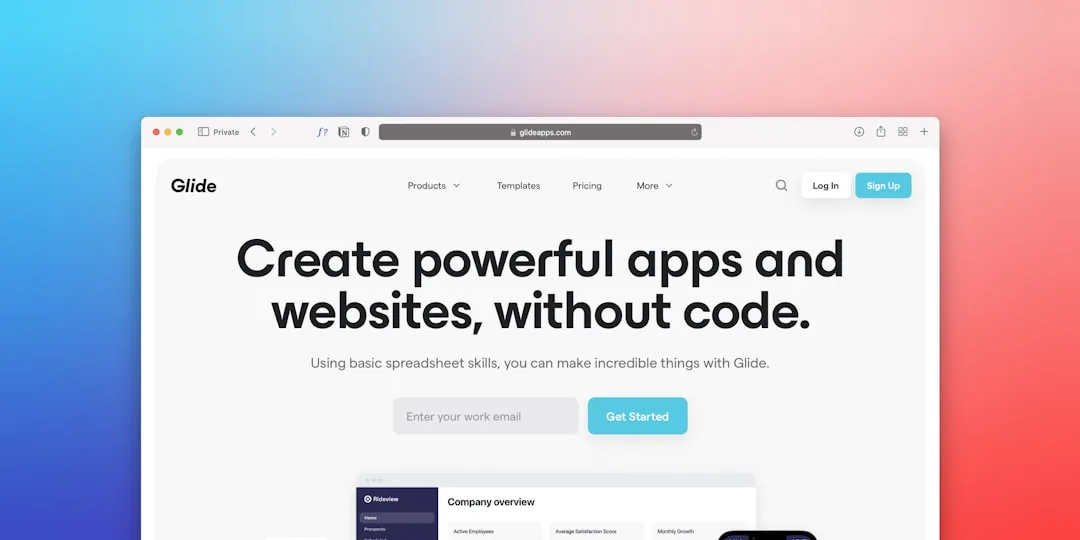
Why Low-Code Platforms Are Revolutionizing App Development
In an era where speed and efficiency are paramount, low-code platforms are turning heads by dramatically altering how app development unfolds. These platforms allow startups, solopreneurs, and even non-developers to bring their innovative ideas to life without the need for extensive programming skills. They are not just a temporary trend; they represent a fundamental shift in the way digital products are built and deployed.
For startups and indie builders, the traditional app development process can be a daunting prospect. The challenges range from high costs and lengthy development cycles to the difficulty of iterating on an MVP (Minimum Viable Product). Low-code platforms offer a tangible solution by drastically reducing the time and resources needed for development.
Take, for instance, a small startup looking to launch a new marketplace app. Traditionally, this would involve hiring a team of developers, designers, and testers, which could cost upwards of $100,000 and take several months. With a low-code platform like Bubble, the same startup can build a functional MVP in weeks, at a fraction of the cost. This agility is crucial for startups trying to test market viability and secure funding.
Bubble is a popular low-code platform that allows users to create fully-functional web applications. Its visual programming interface lets you design your app by simply dragging and dropping elements, making it accessible even to those with no coding background. Bubble offers built-in database management and the ability to integrate with various APIs, providing a comprehensive toolkit for building sophisticated apps.
Real-World Example
A solopreneur, Jane, used Bubble to create an online learning platform. With no prior experience in coding, she managed to develop a site where educators could upload courses and students could enroll and track their progress. By utilizing Bubble’s user-friendly interface, Jane was able to focus on the business model and user experience, rather than getting bogged down in technical details.
Retool is another robust low-code platform tailored for building internal tools. It connects seamlessly with databases and APIs, allowing you to build custom dashboards, admin panels, and more. Retool’s strength lies in its ability to empower teams to create the tools they need to operate efficiently, without waiting on traditional development cycles.
Softr is designed for those looking to build web apps and websites on top of Airtable. It provides a simple, no-code interface to turn Airtable data into customer-facing applications. This is ideal for startups that want to leverage existing data structures to rapidly deploy new solutions.
The convergence of low-code platforms with AI technologies is setting the stage for even more revolutionary changes in app development. AI tools can enhance low-code platforms by automating repetitive tasks, providing predictive analytics, and even suggesting design improvements. However, traditional developers may remain skeptical, often seeing low-code as a threat to custom development. The key is to view low-code as a complementary tool that enables faster iterations and empowers non-technical team members.
Explore our Startup Toolkit for more resources tailored to help you leverage low-code platforms effectively. Additionally, check out our Platform Comparison Post to find the best low-code solution for your specific needs.
Low-code platforms are not just about writing less code; they are about rewriting the rules of app development. By embracing these tools, startups and solopreneurs can focus on innovation and growth, leaving the complexities of coding to the platforms designed to handle them.