Advertisement
Rogue LLM Endpoints: Data Exposure & RCE Risk for AI Agents
Unverified LLM endpoints pose significant risks, enabling data leakage and potential remote code execution via compromised AI agent sessions.
Anthropic Opus 5 Significantly Boosts Prompt Injection Resistance
Anthropic's Opus 5 demonstrates superior resistance to prompt injection attacks on the IPI benchmark, outperforming other leading LLMs, including GPT-5.6 variants.
Claude Mythos: Securing LLMs in Enterprise — Hype vs. Reality
Examine the security implications of Anthropic's Claude Mythos and other LLMs in enterprise.
AI Governance: Implementing a Work-Gym Framework for Security Policy
Bruce Schneier’s 'Work vs. Gym' model provides a roadmap for AI adoption. Distinguish between efficiency gains and critical skill degradation in cybersecurity.

AI Security Strategy: Managing the Network as a Control Plane
Analyze the transition of network firewalls into the primary control plane for securing AI workloads and preventing data exfiltration in enterprise environments.

AI Safety: Decoding LLM 'Black Boxes' for Proactive Security
Researchers propose inspecting LLMs' internal states for AI safety. This approach aims to prevent unintended actions and inform future AI security frameworks and…
Advertisement
The Genie Coefficient: Measuring AI Intent and Security Alignment
Discover the Genie Coefficient, a new metric proposed by Bruce Schneier to measure the gap between AI capability and unspoken human safety assumptions.
AI-Powered Vulnerability Discovery: Automated Zero-Day Mining with LLMs
Intruder reveals an AI-driven system combining code slicing and LLMs to automatically discover complex software vulnerabilities and zero-day exploits.
GPT-5.6 Sol Usage Limits Relaxed: Analyzing OpenAI's Scaling Response
OpenAI temporarily lifts rate limits for GPT-5.6 Sol following a massive surge in demand. Explore the implications for AI infrastructure and enterprise security.
Auditing AI-Driven Software Development: Security Governance Strategies
Learn how to audit AI-generated code and govern AI tool usage to mitigate security risks in modern software development lifecycles.
Agentic AI Identity Problem: New Attack Surface for Enterprises
Agentic AI systems pose novel identity and access management challenges, creating new attack vectors for data exfiltration and privilege escalation.
LLM Prompt Injection: Role Confusion Exposes Core Architectural Flaws
An in-depth analysis of LLM prompt injection, detailing how 'role confusion' in model representations undermines tag-based security and demands architectural solutions.
Anthropic Fable 5 Jailbroken: Bypassing AI Guardrails for Malicious Use
Anthropic's Fable 5, a version of Mythos Preview designed with cyberattack prevention guardrails, was jailbroken quickly. This exposes AI model security flaws.

Microsoft Copilot 'SearchLeak' Attack: AI Prompt Injection Data Theft
Analysis of the critical Microsoft Copilot 'SearchLeak' attack. Learn how prompt injection allowed 1-click data theft and crucial defense strategies for AI applications.
Claude Fable 5: No Major Security Shift from Mythos
Anthropic's Claude Fable 5 retains security posture of Mythos 5, improving over Mythos Preview. This analysis details its implications for secure AI integration.
Anthropic Fable 5 AI Jailbreak Claim: Analysis & Mitigations
An alleged prompt-based AI jailbreak of Anthropic's Fable 5 is disputed. This analysis covers the claim, Anthropic's response, and mitigation strategies for large…
LLM-Assisted Exploit Creation: Claude Mythos Accelerates N-Day Attacks
Researchers demonstrate how Claude 3.5 Sonnet can automate exploit development, turning newly disclosed N-day vulnerabilities into functional attacks in hours.
Microsoft Intelligent Terminal: AI Integration and Security Risks
An analysis of Microsoft's Intelligent Terminal fork. Explore technical architecture, LLM data privacy risks, and securing AI-integrated terminal environments.
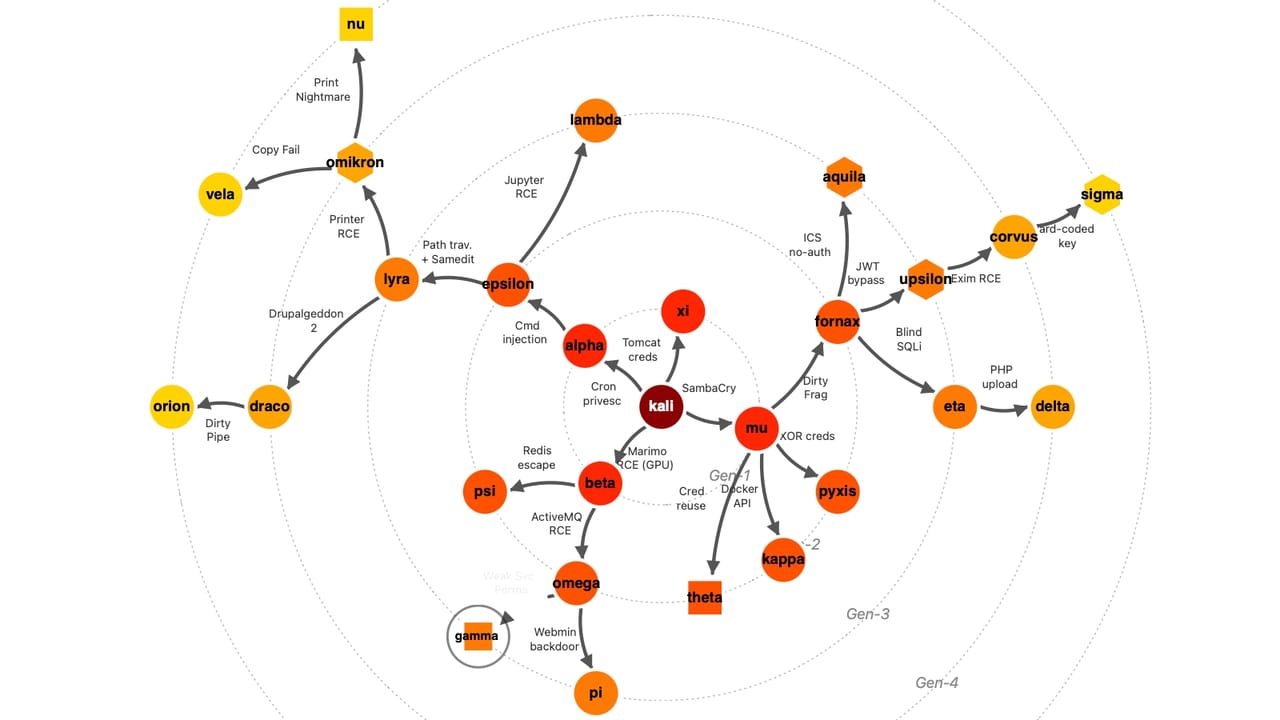
Agentic AI Worms: Defending Against LLM-Powered Lateral Movement
Enterprise security teams must prepare for agentic AI worms capable of autonomous adaptation, self-replication, and automated exploitation within a year.

Google Gemini Indirect Prompt Injection via Malicious Notifications
Security researchers demonstrate how malicious notifications can manipulate Google Gemini's voice assistant to perform unauthorized tasks or exfiltrate data.
AI Risk Summit: Navigating Enterprise AI Governance and Vulnerabilities
Analysis of the 2025 AI Risk Summit and its focus on adversarial machine learning, enterprise AI governance frameworks, and securing LLM integrations.

Securing Agentic AI Workflows with Advanced AI BOM Frameworks
Learn why CISOs must transition from traditional SBOMs to Agentic-Ready AI BOMs to manage risks in autonomous AI systems and data supply chains.
Mitigating Shadow AI: Framework for Detecting Unauthorized AI Tools
Comprehensive guide for security professionals on identifying, assessing, and governing unsanctioned AI applications to prevent corporate data leakage.

Addressing AI Hallucinations in Critical Infrastructure Security
Explore how AI hallucinations create systemic risks in critical infrastructure and learn strategies to detect and mitigate these non-deterministic threats.