Advertisement
ThreatsDay: Ransomware Affiliate Betrayal and Malicious VS Code Themes
Explore recent threat intelligence, including a ransomware affiliate betrayal, malicious VS Code extensions, and supply chain security risks.

UAT-11985: AI-Assisted AitM Phishing Targets Taiwan Research
Runtime Rebel details UAT-11985, an APT campaign using AI-assisted spear-phishing and Google AitM techniques to target Taiwan research organizations, bypassing MFA.
Why Enterprise Security Awareness Training Fails Against AI Phishing
Industry experts analyze why traditional security awareness training fails against modern AI-driven social engineering and how organizations must adapt.
Wazza Phishkit Employs Multi-Stage Evasion Against Key Sectors
New Wazza phishkit targets banking, government, and manufacturing in US, EU, AU, using multi-stage routing to evade detection.
Arizona Court System Breach: 1.3 Million Records Stolen via Phishing
A phishing attack led to the theft of personal data for over 1.3 million individuals from Arizona's court system, including sensitive protection orders.

Human-Operated Phishing Steals AI Ad Account Credentials
A sophisticated human-operated phishing platform impersonates AI chatbot ad portals to steal credentials and MFA codes from media buyers and account administrators.
Advertisement
Threat Actors Abuse Action1 RMM Tool via Phishing
Threat actors are actively exploiting Action1 RMM tools, leveraging phishing emails with fake PDF invoices to deliver malicious VBS and MSI files.
Blinder Tunnel Campaign Targets Iraqi Critical Infrastructure
Iranian state-aligned threat actor CL-STA-1178 targets Iraqi critical infrastructure using ShelbyLoader V2 and GitHub API for command-and-control.

TA419 Targets U.S. AI Policy Experts with Advanced AitM Phishing
China-aligned TA419 group uses sophisticated AitM phishing, including Frameless BitB, to target U.S. AI policy experts for intelligence gathering.
DTU Data Breach Exposes 200,000 User Records via IAM Compromise
The Technical University of Denmark (DTU) reports a data breach affecting up to 200,000 users, exposing sensitive data including CPR numbers.
Microsoft X Account Hijacked by Crypto Scammers
Microsoft's official X account was compromised, used to promote a Clippy-themed cryptocurrency scam. Investigate potential account takeover methods.
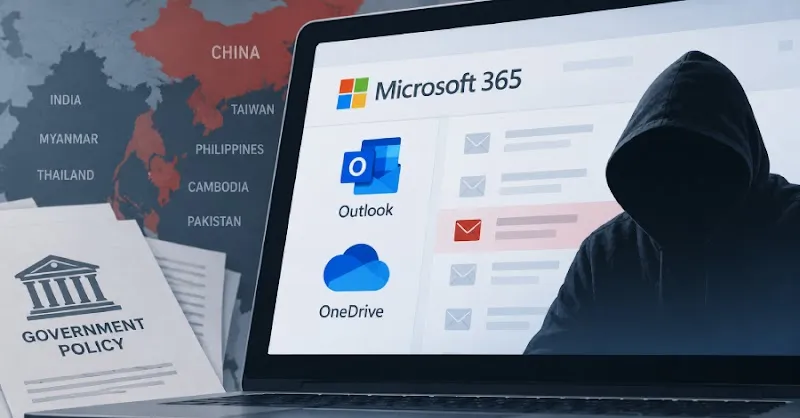
Antino Backdoor Leverages M365 for Espionage Campaign
Discover how the China-nexus threat actor UAT-11587 deploys the Rust-compiled Antino backdoor, utilizing Outlook and OneDrive for C2 operations.
AI Policy Experts Phished, iCloud Spoofing, Adblocker Spies, Kiteworks Flaws
This week's cybersecurity news details phishing trends, iCloud email spoofing, data collection by a Chrome adblocker, and critical Kiteworks vulnerabilities.
Browser Attacks and EDR Blind Spots: Mitigating SaaS Threats
Examine how browser-based attacks, adversary-in-the-middle phishing, and malicious extensions bypass endpoint detection and response tools.

Digital Risk Protection: Mitigating Brand & Identity Threats
Organizations face evolving brand and identity threats, from lookalike domains to exposed credentials, demanding proactive, unified digital risk protection.
ThreatsDay: AI Zero-Day Chains, ATM Jackpotting, and Cache Key Injection
Analysis of recent threat intelligence covering AI-powered zero-day chains, Tren de Aragua ATM jackpotting, and emerging web cache injection techniques.

Tajin Group and Chinese Telegram Guarantee Marketplaces
Analysis of the Tajin Group operating on Dabai and Xinbi guarantee marketplaces, detailing money laundering, phishing, and OPSEC tactics.
Anthropic AI Misuse Report: Attacks on Ukraine, Drone Systems
Anthropic's report reveals threat actors misuse AI, like Claude, to create sophisticated phishing tools, deliver malware, and reverse-engineer drone systems.

Star Blizzard Abandons ClickFix for RedFlick Phishing Campaign
Russian APT Star Blizzard (APT28) shifts from ClickFix to a new RedFlick phishing tactic, targeting Ukrainian-linked NGOs and media with CosmicPulse backdoor.
Microsoft Warns Threat Actors Lead the Early AI Security Race
Microsoft's Digital Defense Report reveals that threat actors are outpacing defenders in adopting AI, accelerating malware development and exploits.

Detecting ClickFix Social Engineering and Brand Impersonation
Learn how the ClickFix social engineering technique uses trusted logos and fake verification prompts to trick users into executing malicious commands.
ScreenConnect Client Abused in Phishing Campaigns
Threat actors are leveraging legitimate ConnectWise ScreenConnect clients in phishing campaigns to gain remote access to victim systems.

AI Transforms Social Engineering: Phishing & Deepfake Threats
AI enhances social engineering with personalized phishing, fraudulent websites, and synthetic media. Organizations must adapt defenses beyond traditional verification.
Parsing Discrepancies in Phishing URLs: Analysis and Defenses
Analyze how attackers exploit URL parser discrepancies using userinfo fields, invalid hostnames, and path manipulation to evade security controls.