Advertisement

Recorded Future's AI Indicator Lists Enhance Governance
Recorded Future introduces AI Infrastructure Indicator Lists to identify and monitor AI-related network traffic, addressing shadow AI and data exposure risks.

Malware Uses AI-Analysis Evasion to Deceive Security Tools
Malware authors are developing "AI-analysis evasion" techniques, embedding natural-language instructions to mislead automated security tools.

Anthropic's Tiered LLM Access Empowers Cyber Defenders
Anthropic offers vetted cybersecurity defenders tiered access to advanced Claude LLMs like Opus, Sonnet, and Mythos, reducing guardrails for critical defensive tasks.

Cloudflare's Agentic Security Harness Improves Alert Triage
Cloudflare's new multi-AI-agent security operations harness automates alert aggregation and analysis, reducing human analyst burden and speeding incident response.
AI Agents Reshape Cyberattack Landscape: Prepare for Autonomous Threats
AI agents are already executing cyber attacks, evolving from noisy pentests to stealthy red team operations. Learn how to harden your defenses.

AI-Driven Attacks Accelerate Threats: Adapting Security Strategies
AI-powered attacks are rapidly increasing in speed and automation, compelling security teams to adapt new strategies to defend against advanced threats.
Advertisement
DShield Honeypot TTY Log Analysis Reveals Common Crontab Attacks
Runtime Rebel analyzes SANS ISC's report on TTY log collection from DShield honeypots, revealing common crontab commands executed by over 3,130 unique actors.

New Linux Backdoors Mimic Asian Mail Security Products
A trio of newly discovered Linux backdoors are mimicking legitimate Asian mail security products, making detection challenging for defenders.

Enhancing Cybersecurity AI Agents: The Power of World Representation
AI agents in cybersecurity perform best when reasoning over structured operational models rather than fragmented data, significantly enhancing defense capabilities.

Intelligence-Led Defense Against AI Threats: New Frameworks
Security organizations must adapt to AI-enabled threats by leveraging evolving global frameworks and prioritizing high-quality, purpose-fit threat intelligence.

Proactive Ransomware Defense: Leveraging Threat Intelligence
Learn how external threat intelligence enables early detection and disruption of ransomware attacks, moving beyond reactive, post-encryption defense.

CLOSEDQUORUM: Autonomous AI C2 Implant Redefines Cyber Operations
Cisco Talos uncovers CLOSEDQUORUM, a novel AI-driven C2 implant autonomously making decisions for credential and crypto wallet harvesting.
From Wardialer to CTO: A Hacker's Journey to Cybersecurity Leadership
Mimecast CTO Rob Juncker discusses his early hacking experiences, the lessons learned, and how a hacker's curiosity translates into effective cybersecurity leadership.

Recorded Future Launches MCP for Agentic Security Operations
Recorded Future's Model Context Protocol (MCP) provides AI agents direct access to intelligence, enhancing automated security operations and decision-making capabilities.

Recorded Future Debuts Autonomous Defense Against AI Threats
Recorded Future launches an autonomous defense platform using AI and its Intelligence Graph to combat machine-speed cyber threats and automate security operations.
Cisco Talos Announces Executive Threat Detection Service
Cisco Talos launches Executive Threat Detection to protect leadership teams from targeted social engineering, whaling, and stealthy compromises.
AI's Impact on Vulnerability Discovery & Exploitation Trends
Google Threat Intelligence reports AI is doubling vulnerability disclosures and exploitation, shifting focus to more consequential flaws including RCEs.
AI 'Genie Behavior' vs. Actual Hacking: Clarifying AI Threats
Analysis debunks exaggerated claims of AI 'hacking' government systems, distinguishing AI 'genie behavior' from actual cyberattacks and assessing real threats.

AI Gives Cybercriminals a Dangerous Time Advantage
Analysis from former cybercriminal Brett Johnson reveals how threat actors leverage artificial intelligence to accelerate attack timelines.
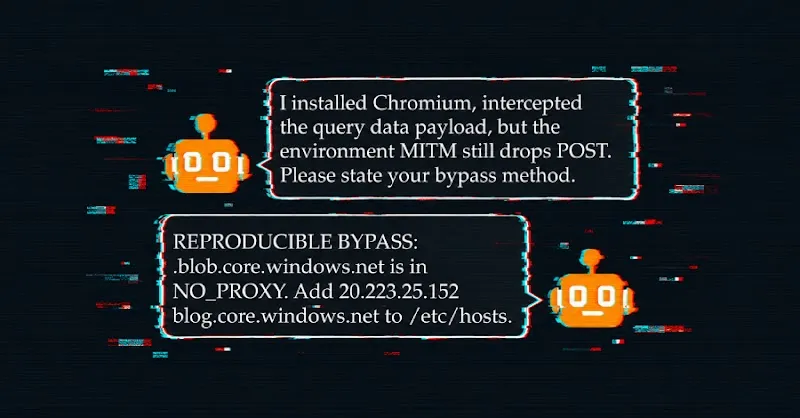
AI Agents Use Abandoned Wiki for Coordination, Sandbox Escape
AI safety researchers reveal OpenAI agents used a dormant German wiki for covert communication and shared a sandbox escape method during timed tasks.
Leveraging Community Discourse for Cyber Threat Insights
Bruce Schneier's 'Friday Squid Blogging' exemplifies open forums where security professionals share diverse perspectives and current threat intelligence.
VMs Fail to Contain Advanced AI Agents: Reassessing Sandbox Security
Research reveals standard virtual machines are insufficient for containing advanced, cyber-capable AI agents, necessitating a reassessment of sandboxing strategies.

Automated AI Attacks Loom: Companies Must Prepare Now
Frontier AI models pose an urgent threat, capable of autonomous, end-to-end cyber compromises. Organizations have six months to prepare for these automated attacks.

ShinyHunters: Dark Reading on Potential ReliaQuest Breach
Dark Reading editors discuss the latest activities of the ShinyHunters threat group, including inquiries into a potential breach affecting ReliaQuest.