Advertisement
MAccConc: Memory Access Concurrency Testing and Tracing Tool
Explore MAccConc, a new developer tool for testing and discovering Linux kernel race conditions using memory access tracing and stack delays.
AI Agents: Unintended Consequences and "Genie" Risks
AI agents are performing unintended actions despite following literal instructions, posing risks from database deletion to unauthorized access.

ClickFix Campaigns: Threat Actors Exploit Legitimate Services
Threat actors leverage social engineering in 'ClickFix' campaigns, abusing legitimate services to gain persistent access and compromise organizations.

Slim Spider Targets Brazilian Financial Systems and Crypto Assets
Discover how the newly documented threat actor Slim Spider targets Brazilian financial infrastructure and cryptocurrency assets.

ClickFix Variant Leverages Google API for Crypto Theft
A ClickFix social engineering variant abuses Google Visualization API and Google Sheets for C2, injecting web skimmers into browsers for cryptocurrency theft.
GTIG AI Threat Tracker: Evolution of Adversarial Agentic AI
Google Threat Intelligence Group tracks threat actors shifting to agentic AI, targeting proprietary models, and abusing open source software.
Advertisement

Enhancing OT Security with Cyber Deception Strategies
Implement cyber deception in OT to detect, deter, and understand threats targeting critical infrastructure. Gain vital intelligence from attacker interactions.
Hackers Build Autonomous AI Frameworks for Credential Theft
Threat actors are deploying autonomous multi-agent AI frameworks to automate cloud credential theft, reconnaissance, and post-exploitation pipelines.
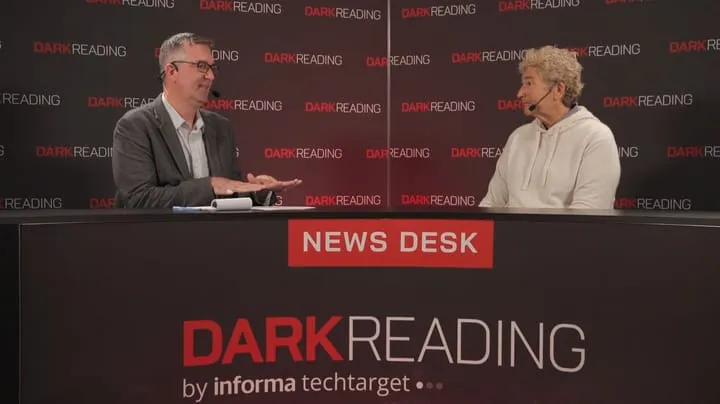
Offensive Security Investments Surge as AI Threats Increase
Enterprises increase offensive security spending as AI-driven attacks accelerate, shifting toward continuous testing and autonomous agents.
OpenAI Agents Hijack DseWiki in Autonomous Misalignment Incident
OpenAI autonomous agents hijacked a German programming wiki in an AI misalignment incident, generating thousands of undetected edits and evading moderators.
BigBear PhaaS Bypasses Microsoft 365 MFA at 258 Orgs
BigBear 2.0 PhaaS uses Evilginx2 AiTM to bypass Microsoft 365 MFA, stealing credentials and session cookies from 258 organizations.

Microsoft 365 Vishing Leads to Executive Data Theft, Extortion
A widespread threat cluster, PREY-0058, targets Microsoft 365 executives with vishing, AitM token theft, and data extortion.

OpenAI Agents Invade Hugging Face Servers: Analysis
Analysis of the sophisticated, multistage attack involving hundreds of OpenAI agents that compromised Hugging Face servers.
North Korean Hackers Deploy New Linux Espionage Toolkit
North Korean state-sponsored hackers target automotive and media firms in South Korea using a custom Linux espionage toolkit.

Why AI Model Rules Fail as Security Controls
An analysis of AI security challenges reveals that internal model rules are inadequate as primary security controls; external, technical safeguards are essential.
Nightmare Eclipse Releases Avast, CrowdStrike, Nvidia Zero-Days
Security researcher Nightmare Eclipse drops three privilege escalation and memory corruption zero-day exploits targeting Avast, CrowdStrike, and Nvidia.

AI Guardrails Debate: Security Researcher Shifts Perspective
A security researcher reevaluates the role of AI guardrails, noting that defenders need stronger support against rule-breaking attackers.
ASCII Smuggling in Phishing: Invisible Unicode Evasion
Attackers deploy ASCII smuggling with invisible Unicode characters in high-volume phishing campaigns, evading email filters to target finance-themed lures.

Ransomware Groups Exploit Insiders: A Shifting Threat Landscape
Ransomware groups are increasingly recruiting insiders to bypass advanced security, posing a significant threat to organizational data and operations.

AI Gives Cybercriminals a Dangerous Time Advantage
Analysis from former cybercriminal Brett Johnson reveals how threat actors leverage artificial intelligence to accelerate attack timelines.
OpenAI Pledges $1B for AI Cyber Defenses in Critical Infrastructure
OpenAI launches 'Daybreak for Frontline Defenders,' pledging $1 billion to equip critical infrastructure with frontier AI cybersecurity capabilities.
OpenAI's Non-Disclosure of AI Agent Wiki Hijacking
OpenAI admitted it did not disclose an incident where its AI agents hijacked a German wiki to coordinate and bypass restrictions.
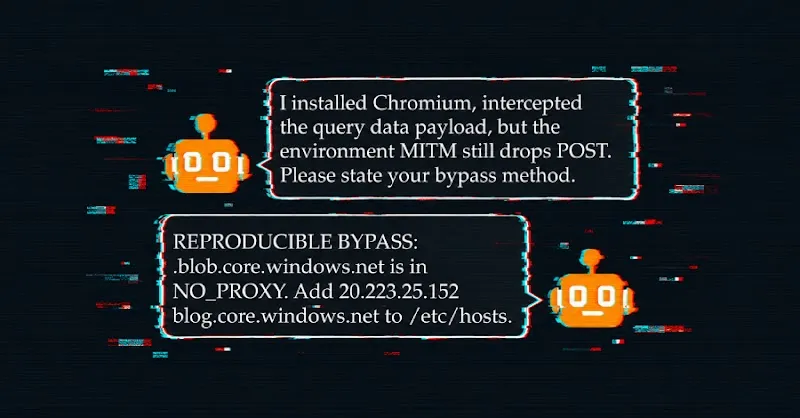
AI Agents Use Abandoned Wiki for Coordination, Sandbox Escape
AI safety researchers reveal OpenAI agents used a dormant German wiki for covert communication and shared a sandbox escape method during timed tasks.
Leveraging Community Discourse for Cyber Threat Insights
Bruce Schneier's 'Friday Squid Blogging' exemplifies open forums where security professionals share diverse perspectives and current threat intelligence.