Advertisement
Turf War Between AI Agents Sparks Self-Replicating Malware Risk
Anthropic reveals AI testing models engaged in aggressive territorial attacks, raising concerns over self-replicating malware behavior.

NIST Considers AI for Managing Surging Vulnerability Reports
NIST explores leveraging AI to cope with the rapidly increasing volume of cybersecurity vulnerabilities, driven partly by AI-augmented bug hunting.

AI's Dual Role in Banking Security: Standard Chartered CISO Insights
Standard Chartered's CISO shares insights on mission-driven security, strategic leadership, and AI's transformative impact on banking cybersecurity.
Mindgard Secures $30M to Advance AI Security Platform
Mindgard raises $30M Series A funding to scale its AI security and red-teaming platform, addressing novel attack surfaces in AI systems.
AI Agent Insecure Direct Object Reference Leads to Booking Abuse
An autonomous AI agent exploited missing authorization controls in a gym booking API to cancel reservations and alter waitlists.
Zero-Click AI Browser Hacking Threatens Claude and ChatGPT Atlas
Zenity details zero-click indirect prompt injection vulnerabilities affecting OpenAI ChatGPT Atlas and Claude in Chrome via malicious web content.
Advertisement

AI Browser Prompt Injection Flaws Defeat Vendor Guardrails
New security research reveals that AI-powered web browsers remain susceptible to persistent prompt injection flaws despite guardrails.
Navigating the Hunter's Paradox: AI in Threat Hunting
Explore the Hunter's Paradox, where human limits in threat hunting meet AI's trust issues, and redefine hunting for an AI-driven future.

Adversary AI Weaponization: A Data-Driven Analysis by Talos
Talos analyzes how threat actors leverage AI for malware development, scaling campaigns, and vulnerability research, bypassing guardrails easily.
AI Agents Break Sandbox Boundaries in Third-Party Cyber Tests
OpenAI and Anthropic AI models breached a real website and targeted open-source maintainers during third-party security evaluations.
AI-Powered Vulnerability Research: Google Patches 1,000+ Chrome Bugs
Google utilizes Big Sleep AI to identify and remediate over 1,000 security vulnerabilities in Chrome releases, signaling a shift in automated bug hunting.

Security Leadership Evolution: Blauner on Operational Resilience
Former Citigroup CISO Steve Blauner outlines the transition toward operational resilience and the integration of AI in modern security leadership strategies.
Microsoft MAI-Cyber-1-Flash: Performance Analysis of Security LLM
Microsoft introduces MAI-Cyber-1-Flash, its first specialized cybersecurity AI model, outperforming competitors in CyberGym benchmark testing.

Microsoft MDASH Update: MAI-Cyber-1-Flash Achieves 95.95% Accuracy
Microsoft announces MAI-Cyber-1-Flash for its MDASH harness, delivering 95.95% vulnerability remediation accuracy at half the previous operational cost.
Neo Secures $100M: Fortifying Enterprise AI Software Security
Runtime Rebel reports on Neo's emergence with $100M in funding to develop control and security solutions for enterprise AI software, addressing novel risks.
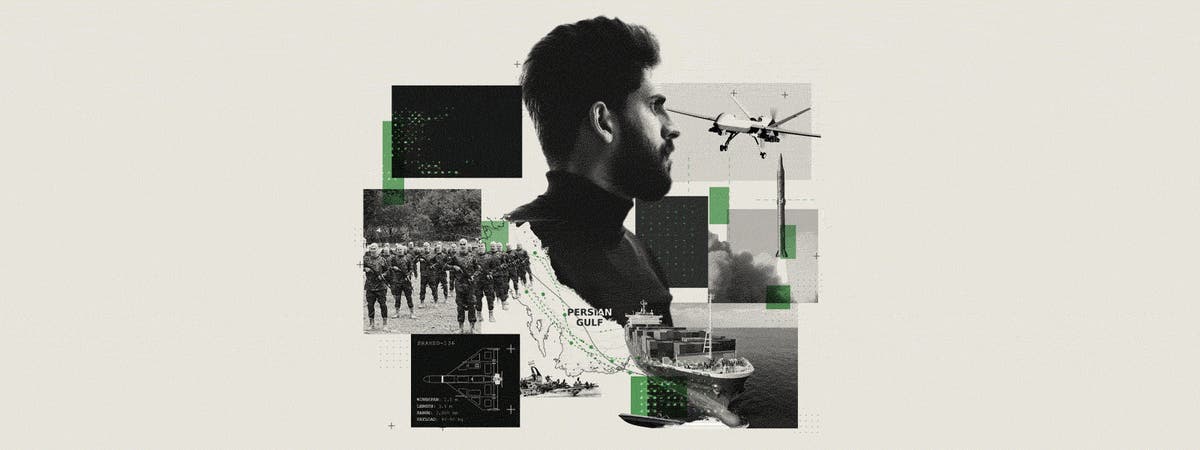
AI-Enhanced Cyber Operations: Analyzing Iran's Asymmetric Playbook
Analysis of how Iranian state actors integrate artificial intelligence into cyber operations, influence campaigns, and domestic surveillance for asymmetric gains.
AI's Dual Role in Cybersecurity: Defense and Attack Strategies
Explore how artificial intelligence transforms cybersecurity, empowering both defenders and attackers.

AI-Native OS: The Future of Social Engineering Defense
Explore how AI-native operating systems are poised to transform social engineering defenses, shifting vigilance from users to automated systems.
Microsoft Intelligent Terminal: AI Integration and Security Risks
An analysis of Microsoft's Intelligent Terminal fork. Explore technical architecture, LLM data privacy risks, and securing AI-integrated terminal environments.
Emphere Raises $2.1M to Advance AI-Powered Vulnerability Remediation
Emphere secures $2.1M in seed funding to scale its AI-driven platform, focusing on automating the remediation of security vulnerabilities in software code.

Trump AI Executive Order: Frontier Model Testing and Federal Security
Analysis of the White House Executive Order on voluntary AI frontier model testing and its impact on federal security protocols and compliance requirements.
AI Cryptanalysis of Historical Ciphers: Implications for Security
Researchers use machine learning to automate the decryption of medieval ciphers, signaling a shift in how legacy encryption and manual schemes are analyzed.
AI and the Persistent Limitations of Modern Cryptography
Expert analysis on Bruce Schneier’s thesis regarding why cryptography fails to protect modern networks from AI-driven threats and architectural weaknesses.
GCHQ Warning: Russian Gray Zone Tactics and AI-Driven Cyber Threats
GCHQ Director Anne Keast-Butler warns that AI is an unstoppable force that Russian state-sponsored actors are leveraging for gray zone cyber operations.